


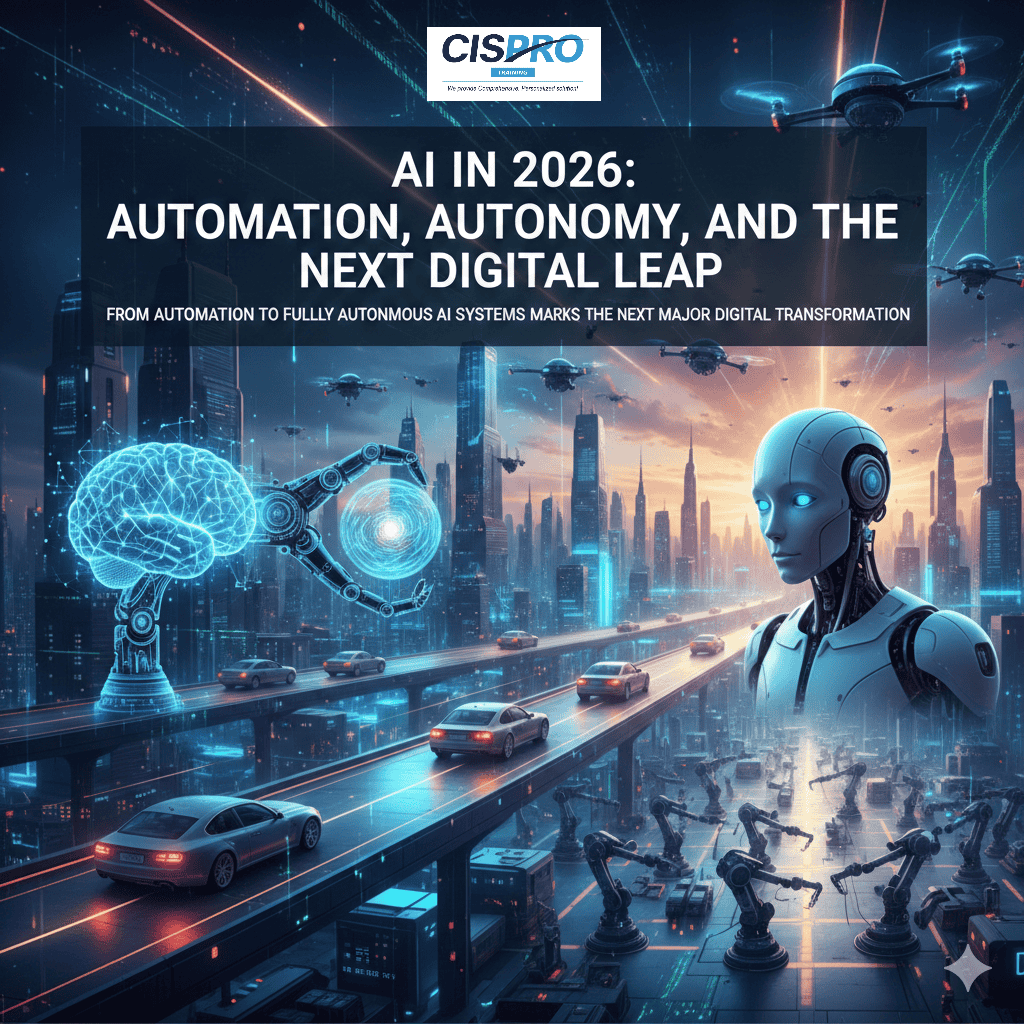
AI in 2026: Automation, Autonomy, and the Next Digital Leap
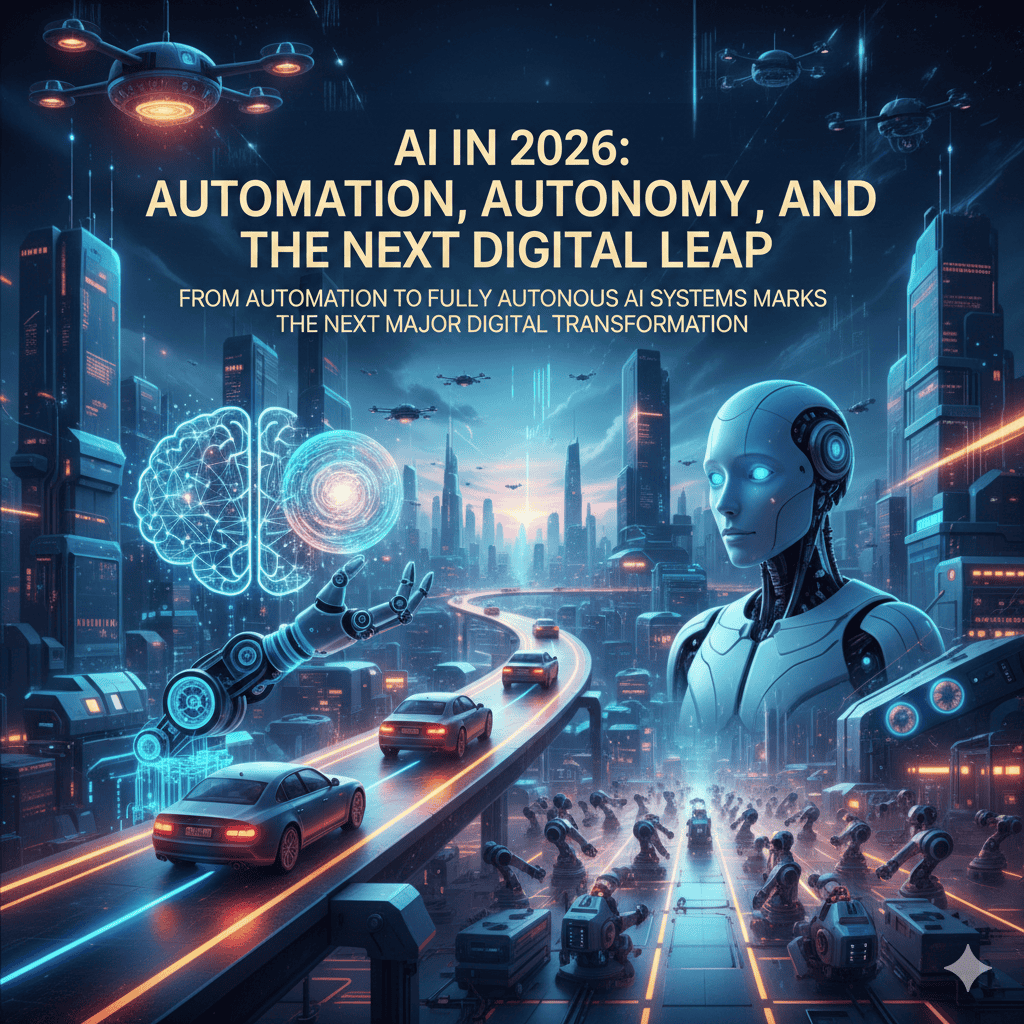
AI in 2026 is redefining how businesses operate and how individuals interact with technology. The shift from basic AI automation to fully autonomous AI systems marks the next major digital transformation. Organizations are no longer just automating tasks—they are deploying intelligent agents capable of decision-making, adaptation, and independent execution.
From AI Automation to Autonomous AI Systems
Automation has long improved efficiency, but AI in 2026 goes beyond rule-based workflows. Autonomous AI systems can interpret goals, analyze live data, and execute multi-step processes without constant human input.
Key capabilities include:
Goal-based task execution
Real-time learning and adaptation
Predictive decision-making
Context-aware responses
This evolution represents a move from reactive systems to proactive digital intelligence.
AI in 2026 Across Major Industries
Healthcare Innovation: Autonomous AI improves diagnostics, patient monitoring, and treatment planning while reducing human error.
Financial Services Transformation: AI-powered fraud detection, algorithmic trading, and risk analysis systems respond instantly to market shifts.
Retail and E-commerce Personalization: AI agents manage inventory forecasting, pricing strategies, and personalized recommendations.
Smart Manufacturing: Predictive maintenance and AI robotics reduce downtime and optimize production cycles.
The Rise of Intelligent Agents in 2026
One of the biggest AI trends in 2026 is the rise of intelligent agents. Unlike traditional chatbots, these systems:
Access APIs and enterprise tools
Plan and execute complex workflows
Monitor performance continuously
Improve through feedback loops
Businesses leveraging autonomous AI gain operational speed and strategic advantage.
Enterprise AI Adoption and Competitive Advantage
Companies investing in AI in 2026 experience:
Reduced operational costs
Faster strategic decisions
Enhanced customer experience
Scalable digital operations
AI is becoming core infrastructure rather than an experimental tool.
Ethical Considerations and AI Governance
With increased autonomy comes responsibility. Businesses must address:
Data privacy protection
Algorithmic bias
Transparency in AI decision-making
Regulatory compliance
Responsible AI adoption will define sustainable digital growth.
The Technology Powering AI in 2026
Several innovations drive this transformation:
Advanced large language models
Multimodal AI systems
Edge computing
AI acceleration hardware
These advancements enable smarter, faster, and more autonomous systems.
AI in 2026 signals a shift from automation to autonomy. Intelligent systems are no longer passive tools—they are active digital partners. Organizations that embrace this transformation will lead the next wave of innovation and digital competitiveness.